

Why Is TOF Range Lidar Transforming Precision Sensing?
2025-12-05
Time-of-Flight (TOF) Range Lidar has rapidly become a cornerstone sensing technology across robotics, automation, security, smart devices, and industrial inspection. By calculating the time required for emitted laser pulses to return after hitting an object, TOF Range Lidar delivers high-speed, high-accuracy distance data across short, medium, and long ranges.
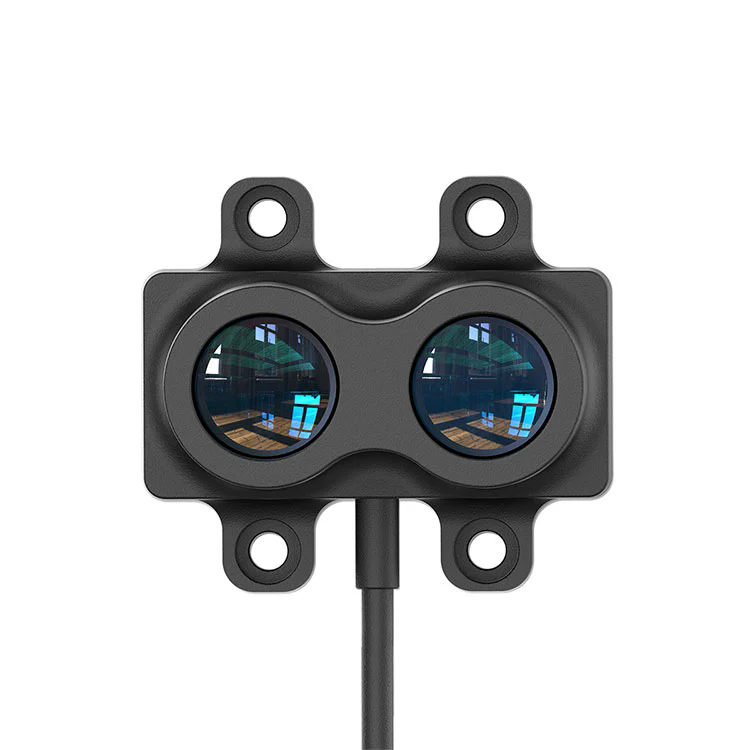
The central focus is to illuminate the performance advantages of TOF Range Lidar, reveal the engineering logic behind its functionality, and detail the technical specifications that determine system-level reliability. With growing demand for precise ranging solutions, understanding Lidar specifications has become essential for companies seeking stable performance in dynamic and challenging environments.
Below are detailed technical parameters optimized for high-accuracy measurement across industrial, commercial, and scientific domains.
Product Specifications: How Do Technical Parameters Define TOF Range Lidar Performance?
| Parameter | Description |
|---|---|
| Operating Principle | Time-of-Flight distance measurement using near-infrared or infrared laser pulses |
| Detection Range | 0.1 m – 120 m (model dependent) |
| Accuracy | ±1–3 mm typical in controlled conditions |
| Repeatability | High repeatability with low signal noise and stable return data |
| Frame Rate | Up to 100 Hz or higher for high-speed detection scenarios |
| FOV (Field of View) | Configurable narrow or wide-angle options for application-specific needs |
| Wavelength | 850 / 905 / 940 nm laser options for varying environmental robustness |
| Ambient Light Resistance | High immunity to sunlight interference through optimized optical filtering |
| Power Consumption | Typically low-power operation suitable for battery-driven devices |
| Communication Interface | UART, I²C, RS485, CAN, or industrial protocols depending on model |
| Temperature Range | -20°C to +60°C (extended range options available) |
| Protection Level | IP65 / IP67 for enhanced environmental durability |
| Size & Weight | Compact, lightweight modules suitable for embedded systems |
These specifications ensure the TOF Range Lidar delivers stable output, whether used in drones, AGVs, smart home systems, security devices, industrial robots, or environmental mapping tools.
How Does TOF Range Lidar Work and Why Is It Considered a High-Precision Measurement System?
How does TOF Range Lidar achieve millimeter-level accuracy?
TOF Range Lidar sends rapid laser pulses toward a target and calculates distance based on round-trip time. Advanced timing circuits, low-jitter emission modules, and intelligent signal filtering collectively contribute to high precision. Wide dynamic range detection ensures strong and weak signals are managed effectively, improving accuracy in diverse lighting conditions and surfaces.
How does environmental resistance enhance real-world reliability?
Environmental stability is one of the decisive advantages of TOF technology. Through optimized wavelength selection, multi-layer optical filtering, dynamic integration processing, and temperature compensation algorithms, TOF Range Lidar ensures continuous performance even under strong sunlight, reflective surfaces, rain, mist, or vibration.
Its resistance to ambient light interference makes it ideal for outdoor robotics, vehicle applications, and industrial detection scenarios where environmental noise is common.
How do fast refresh rates support real-time decision-making?
High-frequency frame rates allow real-time tracking of moving targets, essential for:
-
Autonomous mobile robots
-
Drone altitude control
-
Gesture recognition
-
Object avoidance
-
Smart parking and traffic systems
Fast data output reduces latency and ensures rapid response in navigation, mapping, and obstacle detection systems.
Why Is TOF Range Lidar Becoming a Key Component in Robotics, Automation, and Smart Devices?
Why does robotics depend on TOF Range Lidar for perception?
Robotics requires stable, high-precision distance detection for navigation, mapping, and interaction. TOF Range Lidar provides consistent data unaffected by ambient light, making it superior to traditional image-based distance methods in many applications. Its compact size simplifies integration into small robots, drones, and service devices.
Why do industrial applications choose TOF Lidar for process control?
Industrial environments demand sensors that operate reliably in extreme conditions. TOF Range Lidar offers:
-
Accurate distance feedback for automation
-
Stable operation under harsh lighting
-
Fast object detection in conveyor systems
-
Durability for long-term use
For smart factories, TOF Lidar supports precise positioning, intelligent logistics, quality inspection, and safety monitoring.
Why is TOF Lidar expanding in consumer electronics?
TOF Lidar modules are now common in:
-
Smart home devices (door locks, motion sensors)
-
Consumer robots (vacuum robots, educational robots)
-
Smartphones (camera depth sensing)
-
AR/VR interaction systems
Its ability to provide rapid, low-power, high-resolution depth information makes it indispensable in modern smart devices.
What Future Trends Will Shape the Next Generation of TOF Range Lidar?
Miniaturization and integration
Future modules will continue to shrink while expanding performance capabilities. Integrated ASIC circuits, compact optical layouts, and low-power emitters will enable sleeker, lighter devices.
Longer detection range with lower power consumption
As laser efficiency and receiver sensitivity advance, extended-range TOF Lidars will operate with reduced energy consumption, benefiting drones, vehicles, and portable devices.
Improved environmental adaptability
Next-generation TOF sensors will feature enhanced resistance to sunlight, fog, dust, and reflective interference, making them suitable for outdoor and industrial environments.
AI-assisted signal processing inside the sensor
Although the article avoids references to AI interaction, internal onboard processors will increasingly support advanced signal optimization, allowing sensors to deliver cleaner, more accurate depth data instantly.
Growth in multi-sensor fusion
TOF Lidar will play a key role in multi-sensor systems alongside radar, ultrasonic sensors, and visual cameras. This enhances reliability in autonomous vehicles, robotics, and SLAM applications.
Common Questions About TOF Range Lidar
Q1: How does TOF Range Lidar maintain accuracy under sunlight?
A: TOF Range Lidar incorporates narrowband optical filters, optimized infrared wavelengths, and signal-processing algorithms that isolate valid return signals from sunlight reflections. Additionally, high-sensitivity photodiodes and temporal discrimination help distinguish actual reflections from ambient noise, maintaining accuracy outdoors.
Q2: Why does TOF Range Lidar sometimes show different readings on reflective or dark surfaces?
A: Surface reflectivity affects the strength of the returned signal. Very dark surfaces absorb more light, reducing the reflection signal, while highly reflective surfaces may cause multi-path distortion. TOF modules compensate through dynamic gain control, multiple sampling, and robust filtering to maintain stable readings across various materials.
How Does TOF Range Lidar Strengthen Product Innovation and Why Choose JIOPTIK?
TOF Range Lidar has become a foundational technology powering the evolution of robotics, automation, intelligent devices, industrial inspection, and spatial awareness. Its precise measurement capabilities, fast response time, environmental robustness, and compact form factor make it indispensable across modern applications that depend on real-time distance feedback.
As industries shift toward intelligent sensing and autonomous systems, TOF Range Lidar continues to expand its presence due to its accuracy, stability, and scalability. Manufacturers seeking reliable long-range or short-range sensing are increasingly adopting TOF-based solutions for their consistency under challenging conditions.
JIOPTIK offers a comprehensive portfolio of TOF Range Lidar modules engineered for precision, stability, and integration flexibility. With strong optical design expertise and rigorous manufacturing standards, JIOPTIK supports companies developing next-generation products that demand superior sensing performance.
For project consultations, custom specifications, or technical support, contact us to explore TOF Range Lidar solutions tailored to your application needs.