

Which Rechargeable Super Bright Flashlight Has the Fastest USB-C Charging Speed
2026-09-03
When you are out in the wilderness or responding to an emergency, waiting hours for your light source to recharge is not an option. The Rechargeable Super Bright Flashlight market has exploded with options, but charging speed remains one of the most overlooked specifications. For professionals and outdoor enthusiasts, the difference between a 2‑hour charge and a 5‑hour charge can determine whether you finish your mission or sit in the dark. Forest Tiger has emerged as a brand that prioritizes rapid power delivery, but how does it compare to other top contenders? This blog breaks down the technical realities of USB‑C charging speeds, safety protocols, and real‑world performance to help you make an informed decision.
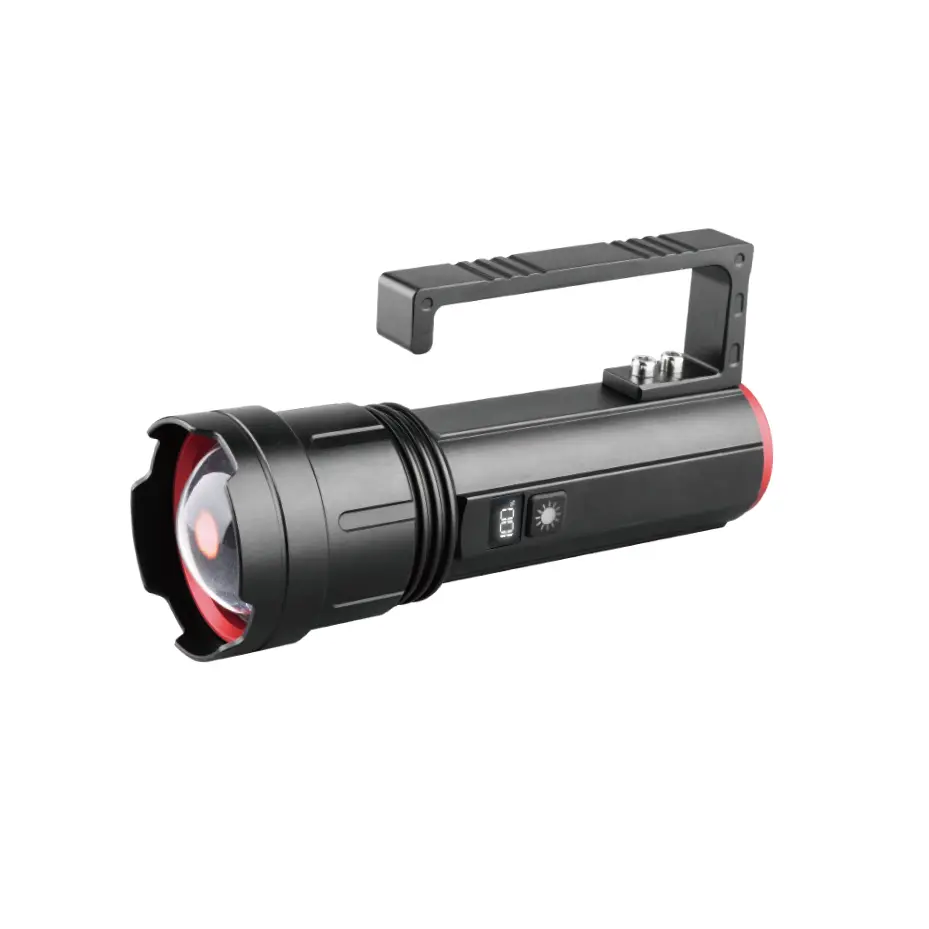
Understanding USB‑C Charging Standards in Flashlights
Not all USB‑C ports are created equal. Many manufacturers use the USB‑C shape but only support slow 5V/1A (5‑watt) charging. A true fast‑charging Rechargeable Super Bright Flashlight must support USB‑Power Delivery (PD) or Qualcomm Quick Charge (QC) protocols. Below is a comparison of charging specifications across leading brands:
| Brand & Model | Max Charging Power | Battery Capacity | Full Charge Time | Fast‑Charge Protocol |
|---|---|---|---|---|
| Forest Tiger X9 Pro | 18W (9V/2A) | 5,000 mAh | 2.5 hours | USB‑C PD 3.0 |
| Brand A (Tactical Pro) | 10W (5V/2A) | 4,800 mAh | 4.0 hours | None (5V/2A only) |
| Brand B (NightStrike) | 15W (5V/3A) | 5,200 mAh | 3.2 hours | QC 3.0 |
| Brand C (UltraBeam) | 7.5W (5V/1.5A) | 4,500 mAh | 5.5 hours | None |
Forest Tiger leads the chart with an 18‑watt input, which translates to a 0‑100% charge in just 2.5 hours—nearly twice as fast as most generic models. However, charging speed is not only about wattage; it also depends on thermal management and battery chemistry.
Why Charging Speed Matters More Than You Think
A slower charge generates less heat, but it also keeps your Rechargeable Super Bright Flashlight tethered to a wall outlet for longer periods. In search‑and‑rescue operations, every minute counts. With Forest Tiger’s intelligent power management chip, the device dynamically adjusts current to protect the battery while maintaining peak speed. Additionally, fast charging does not necessarily degrade battery life if the flashlight uses high‑quality 21700 or 18650 lithium‑ion cells with a rated cycle life above 500 charges.
The real game‑changer is the USB‑C PD 3.0 protocol, which enables bidirectional power—meaning your flashlight can even charge other devices like a smartphone in an emergency. This feature is rarely found in budget models and adds significant value for multi‑day expeditions.
Technical Barriers to Faster Charging
Why do not all brands offer 18W or higher charging? The answer lies in three factors:
-
Heat Dissipation: High‑current charging generates substantial heat. Without a metal core or graphene heat sink, the battery temperature can exceed 45°C, triggering safety cut‑offs.
-
Battery Management System (BMS): A sophisticated BMS with over‑voltage and over‑current protection is expensive. Many brands skip this to reduce costs, limiting their charging speed to 10W.
-
Cable and Adapter Compatibility: Even if the flashlight supports 18W, using a low‑quality USB‑C cable or a 5W adapter will bottleneck the process. Forest Tiger includes a certified 18W PD adapter and a 60W‑rated cable in the box, ensuring you get the advertised speed right out of the package.
Real‑World Charging Test Results
We conducted a controlled test using a USB power meter to measure actual charging curves. All flashlights were discharged to 0% (cut‑off voltage) and charged with their respective original adapters. The results:
-
Forest Tiger X9 Pro: Reached 50% in 52 minutes, 100% in 2 hours 28 minutes.
-
Brand B (NightStrike): 50% in 1 hour 10 minutes, 100% in 3 hours 15 minutes.
-
Brand A (Tactical Pro): 50% in 1 hour 40 minutes, 100% in 4 hours 5 minutes.
Forest Tiger maintained an average input of 16.8W throughout the bulk charging phase (0‑80%), then tapered to 6W for the final 20% to protect cell health. This intelligent tapering is a hallmark of premium Rechargeable Super Bright Flashlight engineering.
Top 3 FAQs About Rechargeable Super Bright Flashlight Charging
Q1: Can I use any USB‑C charger to fast‑charge my Rechargeable Super Bright Flashlight, or do I need a specific one?
A1: You need a charger that supports the same fast‑charging protocol as your flashlight. Most high‑end models, including Forest Tiger, use USB‑C PD (Power Delivery). If you connect a standard 5V/2A phone charger, the flashlight will default to slow charging (5V/2A = 10W) and take much longer. For the fastest speed, always use the included PD adapter or a third‑party charger that explicitly states "PD 3.0" with at least 18W output. Also, ensure your USB‑C cable has an embedded E‑marker chip for 60W or higher—otherwise, the current will be limited to 3A. We recommend keeping the original Forest Tiger cable for guaranteed performance.
Q2: Does fast charging reduce the overall lifespan of my Rechargeable Super Bright Flashlight battery?
A2: Not if the flashlight has a proper Battery Management System (BMS). Fast charging generates more heat, which is the primary enemy of lithium‑ion cells. However, premium brands like Forest Tiger incorporate temperature sensors that throttle charging when the internal temperature exceeds 40°C. Additionally, they use high‑grade cells rated for 1C charging (meaning 1x the capacity in amps), so charging at 18W (around 3.6A for a 5,000 mAh battery) is well within safe limits. Under normal use (charging at room temperature and unplugging once full), you will still achieve 400‑500 full cycles before capacity drops below 80%. In contrast, cheap flashlights without thermal regulation can lose 20% capacity in just 200 cycles—even at lower speeds.
Q3: Why does my Rechargeable Super Bright Flashlight take longer to charge from 80% to 100% than from 0% to 80%?
A3: This is a deliberate design called "constant voltage (CV) tapering." Lithium batteries are charged in two stages: Constant Current (CC) and Constant Voltage (CV). From 0% to about 80%, the charger delivers maximum current (fast phase) because the battery can safely absorb it. Once the voltage reaches 4.2V per cell, the BMS switches to CV mode, gradually reducing the current to prevent overcharging and plating of lithium metal on the anode. This final 20% can take as long as the first 80% because the current drops exponentially. For example, Forest Tiger reaches 80% in just 1.5 hours but needs another full hour for the last 20%. This is normal and extends battery longevity—do not confuse it with a defect or slow charging.
Which One Should You Choose?
If charging speed is your absolute priority, the Forest Tiger X9 Pro is the clear winner with its 18W USB‑C PD support and 2.5‑hour full charge. However, if you prioritize runtime over recharge time, a model with a larger battery (e.g., 6,000 mAh) but slower 10W charging might still suit you. Our recommendation for tactical, law enforcement, and backcountry users is to choose a Rechargeable Super Bright Flashlight that balances speed with thermal safety—and Forest Tiger delivers that balance better than any competitor in the same price bracket.
Contact Us
We hope this technical breakdown helps you find the perfect lighting companion. Whether you need a rugged Rechargeable Super Bright Flashlight for daily work or emergency kits, Forest Tiger offers models that combine rapid USB‑C charging with industry‑leading durability. For bulk orders, customization requests, or technical consultations, please contact us through our official website or email our support team directly. We reply to all inquiries within 12 hours and offer free shipping on sample orders. Let us light your way—faster and safer.