

A 1200W LED stadium light is developed for situations where high luminous output and long-distance projection are required. The optical system, LED chips, heat dissipation structure, driver, housing, mounting angle, and beam distribution all work together to determine the final performance on the field. For commercial and professional projects, these details are often more important than wattage alone.
LedOrientalight focuses on LED lighting solutions for demanding outdoor and professional applications, providing products designed around practical project requirements rather than relying on wattage as the only performance indicator.
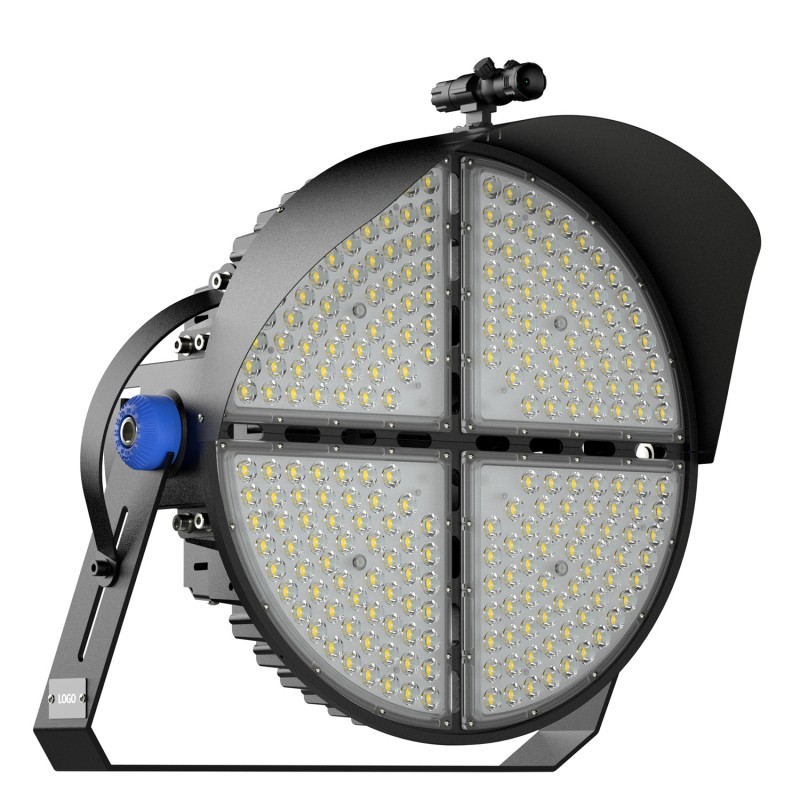
Why Does a Large Stadium Need High-Power LED Lighting?
Large sports venues have wide playing areas and considerable mounting heights. When luminaires are installed on high poles or stadium structures, the light must travel a substantial distance before reaching the target surface. A low-power fixture may create insufficient illumination, while an unsuitable high-power fixture can create excessive glare, uneven brightness, or unnecessary energy consumption.
High-power LED stadium lights are therefore designed around the relationship between output, mounting height, beam angle, aiming position, and required illuminance. A 1200W unit can be particularly useful when a project needs powerful long-range illumination from elevated mounting positions.
How Does a 1200W LED Stadium Light Deliver Useful Illumination?
The practical performance of a stadium light depends on much more than its rated power. A 1200W fixture converts electrical energy into light through a group of high-efficiency LED modules. The resulting light is then shaped by optical lenses or reflectors to create a defined distribution pattern.
LED Modules and Luminous Efficiency
The quality and arrangement of the LED modules influence luminous output, color consistency, thermal performance, and long-term reliability. A professional fixture should maintain stable performance rather than delivering high initial output followed by rapid degradation.
Optical Lenses and Beam Angles
Stadium projects often require different beam distributions depending on the mounting position. Narrower beams can project light over longer distances, while wider distributions may be suitable for areas closer to the fixture. The correct combination helps reduce dark zones and excessive overlap.
Thermal Management
High-power LED fixtures generate heat that must be transferred away from the LED components. A properly engineered heat sink, housing, thermal interface, and ventilation structure help maintain a suitable operating temperature. Effective thermal management is closely related to LED lifespan and light output stability.
What Technical Specifications Matter in Stadium Lighting?
Buyers comparing high-power stadium lights should look beyond the wattage shown on the product label. The following specifications can have a direct effect on project performance and operating costs.
| Specification | Why It Matters | What Buyers Should Check |
|---|---|---|
| Rated Power | Defines the electrical power consumed by the fixture. | Confirm the actual operating power rather than relying only on the model name. |
| Luminous Output | Indicates how much visible light the fixture produces. | Request measured lumen data and test documentation where applicable. |
| Beam Angle | Controls how light is distributed across distance and surface area. | Choose optics according to mounting height and field layout. |
| Color Temperature | Affects the visual appearance of the illuminated venue. | Consider the requirements of sports use, spectators, and cameras. |
| CRI | Influences color reproduction under artificial lighting. | Select an appropriate CRI for the intended venue and broadcasting needs. |
| IP Rating | Indicates protection against dust and water ingress. | Check whether the rating is appropriate for exposed outdoor installation. |
| Surge Protection | Helps protect the lighting system from electrical surge events. | Review the driver and fixture surge protection specifications. |
| Operating Temperature | Determines the environmental range in which the fixture is designed to operate. | Match the specification with the local climate. |
Where Can 1200W LED Stadium Lights Be Used?
The high output of a 1200W LED stadium light makes it suitable for large-scale outdoor and high-bay sports lighting projects. The exact fixture configuration should still be selected according to the size, mounting height, lighting standard, and intended activity of the venue.
- Football and soccer stadiums: Large fields often require powerful, carefully aimed luminaires positioned around the playing area.
- Baseball and softball fields: Different zones may require different beam distributions because of the field geometry.
- Rugby grounds: High-output lighting can support evening matches and training activities.
- Outdoor athletics facilities: Track and field venues can require broad and consistent illumination.
- Large tennis facilities: High-power fixtures can be used for larger multi-court complexes when the optical distribution is correctly designed.
- Training grounds: Professional and community training facilities can use high-output LED systems for extended operating hours.
- Multi-purpose stadiums: A suitable lighting system can support sports events, ceremonies, exhibitions, and other venue activities.
In a professional installation, the fixture should not be selected solely because a particular wattage appears sufficient. A photometric layout can help determine how many luminaires are required and where each unit should be positioned.
How Should Buyers Evaluate Lighting Uniformity?
One common problem in sports lighting is uneven illumination. A field can have a high average lux value while still containing areas that appear noticeably darker. Players may experience inconsistent visibility, and cameras can capture uneven brightness across the playing surface.
Uniformity is influenced by fixture quantity, beam angle, aiming direction, mounting position, pole height, and optical distribution. The goal is not simply to place powerful lights around a field, but to create a coordinated lighting pattern across the entire target area.
- Review the complete field or venue layout before selecting fixture quantities.
- Consider mounting height and distance from each lighting position.
- Use suitable beam angles for different installation zones.
- Pay attention to both average illumination and uniformity.
- Check potential glare toward players, spectators, nearby properties, and cameras.
- Use photometric simulation when planning large or professional venues.
What Causes Glare in High-Power Stadium Lighting?
Glare is particularly important in sports environments because players need to track fast-moving objects while spectators and cameras require comfortable visual conditions. A powerful fixture aimed directly toward a player's normal field of vision can create discomfort even if the overall illumination level is adequate.
Optical control, fixture aiming, mounting location, shielding, and beam selection all influence glare. High-power lighting should therefore be installed as part of a complete lighting design rather than treated as an independent electrical product.
For venues located near residential areas, roads, airports, or other sensitive locations, controlling spill light can also be important. Proper optical distribution allows more of the generated light to remain within the intended sports area.
Why Is Heat Dissipation Important for a 1200W Fixture?
High-power LED systems produce considerable heat during operation. If heat is not efficiently transferred away from the LED components and driver, internal temperatures may increase and affect long-term performance.
A robust stadium fixture normally uses a large heat dissipation structure combined with a durable metal housing. The design should provide an effective thermal path while maintaining protection against outdoor conditions.
Buyers should pay attention to the construction of the heat sink, housing material, driver arrangement, thermal testing information, and specified operating temperature. These details are especially relevant for venues that operate lights for several hours every evening or during frequent competitions.
What Should Be Considered Before Installation?
Installation conditions can significantly affect the actual performance of a high-power stadium lighting system. Even a technically capable fixture may deliver unsatisfactory results if it is installed at an unsuitable height or aimed incorrectly.
Mounting Structure
Confirm that poles, brackets, stadium structures, and mounting points can safely support the selected fixtures. Wind exposure and fixture dimensions should also be considered for outdoor installations.
Electrical Supply
A 1200W fixture requires an appropriate electrical supply and driver configuration. Large projects should consider total connected load, circuit arrangement, protection devices, cable selection, and control requirements.
Aiming and Commissioning
After installation, fixtures should be aimed according to the lighting plan. Small changes in aiming angle can alter the illuminated area considerably, particularly when luminaires are installed at significant heights.
Maintenance Access
Stadium lighting is often installed in locations that are difficult to reach. Maintenance planning should therefore consider access platforms, lifting equipment, fixture weight, driver replacement, and inspection intervals.
How Can LED Stadium Lighting Reduce Long-Term Maintenance?
Traditional high-intensity sports lighting systems can require frequent lamp replacement and related maintenance work. LED technology can reduce these maintenance demands because LED fixtures generally provide a long service life and do not rely on frequent lamp changes in the same way as many conventional systems.
Reduced maintenance can be particularly valuable for stadiums where lighting equipment is installed high above the field. Every maintenance operation may require specialized lifting equipment, temporary access arrangements, labor, and venue downtime.
However, service life should not be considered only as a number of operating hours. The quality of the LED components, driver, thermal system, power supply, installation environment, and operating conditions all contribute to actual product longevity.
What Should B2B Buyers Ask a Stadium Light Supplier?
For distributors, contractors, stadium operators, and lighting project companies, purchasing a 1200W LED stadium light is usually a project decision rather than a simple product purchase. Clear technical communication with the supplier can prevent costly mismatches.
| Buyer Question | Reason for Asking |
|---|---|
| What is the actual power consumption? | Confirms electrical requirements and prevents confusion between nominal and actual power. |
| What optical distributions are available? | Helps match the fixture with mounting height and field geometry. |
| Is photometric data available? | Allows lighting designers to evaluate expected illumination and uniformity. |
| What protection rating does the fixture have? | Important for exposed outdoor stadium environments. |
| What driver is used? | The driver affects electrical stability, dimming capability, and system reliability. |
| Are customization options available? | Useful for projects requiring specific beam angles, controls, connectors, or mounting solutions. |
| What testing and quality documents are provided? | Helps purchasing teams verify product specifications before bulk orders. |
For large projects, buyers can also request samples or conduct a field test before placing a full-volume order. This provides an opportunity to evaluate illumination, beam distribution, glare, installation compatibility, and control functions under real conditions.
What Makes a 1200W LED Stadium Light Suitable for Professional Projects?
A professional stadium lighting product needs to balance output, optical control, thermal management, structural durability, electrical stability, and installation flexibility. Increasing wattage alone does not solve the practical challenges of a large sports venue.
A well-designed 1200W LED stadium light should provide predictable performance under the specified operating conditions. For project buyers, reliable technical documentation is also important because lighting designers need accurate information to calculate fixture quantities and positions.
Product consistency becomes especially important when multiple fixtures are installed around the same field. Differences in color temperature, optical performance, or output can become visible across the venue. Stable manufacturing and quality control therefore contribute directly to the finished lighting effect.
Frequently Asked Questions About 1200W LED Stadium Lights
The answer depends on the stadium size, mounting height, required illumination level, field layout, beam angle, fixture efficiency, and lighting design. Wattage alone cannot determine whether a fixture is sufficient. A photometric calculation should be used to determine the required quantity and positioning.
LED technology can replace many conventional high-power lighting systems when the new fixtures provide suitable output, optical distribution, electrical compatibility, and installation performance. A project-specific comparison should consider actual illumination rather than wattage alone.
Beam angle depends mainly on mounting height, fixture position, distance to the target area, and field geometry. Narrow beams are often useful for long-distance projection, while wider distributions can cover areas closer to the installation point.
No. Electrical power is only one part of lighting performance. LED efficacy, optical efficiency, lens design, beam distribution, fixture quantity, and aiming all influence the amount of useful light reaching the playing surface.
Dimming depends on the LED driver and control system. If variable lighting levels are required for training, competition, maintenance, or event functions, buyers should confirm the available control protocol and dimming range before ordering.
Useful information includes field dimensions, mounting height, number and location of poles, intended sports activity, desired lighting level, local voltage and frequency, environmental conditions, preferred color temperature, control requirements, and any available lighting plan. These details allow the supplier to recommend a more appropriate configuration.
Models specifically designed for outdoor sports applications can be used outdoors when their protection rating, operating temperature, corrosion resistance, electrical protection, and structural design match the installation environment.
Making the Right Lighting Plan for a Large Venue
Choosing a 1200W LED stadium light should begin with the lighting requirements of the venue rather than with the wattage printed on a product specification sheet. Field dimensions, pole arrangement, mounting height, optical distribution, required uniformity, glare control, operating schedule, and local environmental conditions all need to be considered together.
For contractors and commercial buyers, reliable technical data can make the selection process much easier. Photometric files, detailed specifications, driver information, installation drawings, testing documentation, and customization support can help turn a product selection into a workable project solution.
With the right fixture configuration and lighting design, high-power LED technology can provide strong illumination while reducing maintenance requirements and improving control over where light is delivered. This makes it a practical option for stadiums, sports fields, training facilities, and other large outdoor venues.
Discuss Your Stadium Lighting Project
Need a high-output lighting solution for a stadium, sports field, training ground, or large outdoor venue? LedOrientalight can help evaluate your project requirements, including power, beam distribution, mounting conditions, control options, and customized lighting configurations.
Share your field dimensions, installation height, pole layout, and lighting requirements with our team to discuss a suitable solution and project quotation.
Contact us for product details and professional lighting support.