

How to Choose the Best Indoor LED Strip Light for High-Efficiency Home & Commercial Lighting?
2025-12-01
Indoor LED strip lights have become one of the most adaptive, energy-efficient, and design-friendly lighting technologies for modern residential and commercial environments. Their slim form factor, flexible structure, and consistent lumen output enable them to be installed across ceilings, cabinets, shelves, corridors, display areas, and architectural accents with minimal space requirements.
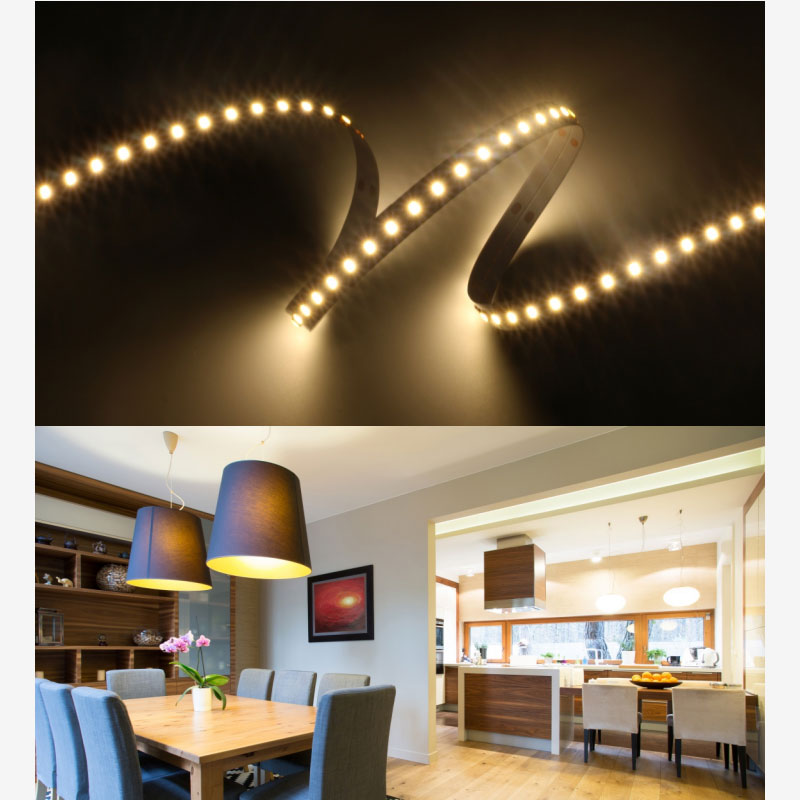
Product Parameter Overview
| Specification Category | Technical Details |
|---|---|
| LED Type | SMD2835 / SMD5050 / SMD2216 high-brightness chips |
| Voltage Options | 12V / 24V DC for safe and stable residential and commercial use |
| Lumen Output | 800–2200 lm/m depending on chip density |
| Color Temperature | 2700K–6500K adjustable; optional tunable white |
| CRI (Color Rendering Index) | ≥90 for true-to-color illumination |
| LED Density | 60 / 120 / 180 / 240 LEDs per meter |
| IP Rating | IP20 for indoor dry areas; optional IP54 coated variants |
| Dimming Compatibility | Triac, 0-10V, PWM, smart-control ready |
| Beam Angle | 120° wide-angle lighting |
| PCB Width | 8mm / 10mm / 12mm options |
| Maximum Run Length | 5m / 10m continuous run depending on power |
| Energy Efficiency | Up to 90% energy savings compared with incandescent |
| Lifespan | 50,000 hours average rating |
| Certification | CE, RoHS, ETL depending on model |
Each of these parameters influences brightness uniformity, energy consumption, color accuracy, and user experience. Understanding how these specifications translate to real-world performance sets the foundation for selecting the ideal lighting solution.
How to Evaluate Indoor LED Strip Light Performance for Accurate and Long-Lasting Illumination?
Selecting a high-performance indoor LED strip light requires assessing how each technical parameter affects stability, safety, and aesthetic results. The key factors include brightness consistency, color rendering, energy efficiency, heat dissipation, and installation conditions.
Lumen Output and Uniformity
Indoor environments require consistent illumination without hotspots or dim areas. LED density and chip quality directly shape uniformity. Higher density—such as 180 or 240 LEDs per meter—produces smoother light lines ideal for under-cabinet illumination, ceiling coves, and showcase lighting. When lumen output reaches professional brightness levels, the strip delivers strong visibility without glare.
Color Temperature Precision
Color temperature affects ambiance and mood. Warm tones (2700K–3000K) suit living rooms and restaurants, while cooler tones (5000K–6500K) enhance task environments. Tunable white LED strip lights empower installers to switch between color temperatures depending on time of day or user requirements.
CRI Quality
High CRI ratings preserve accurate color appearance in retail, galleries, and interior décor settings. A CRI above 90 ensures materials, furnishings, artworks, and products appear vibrant and true to life. This is crucial in commercial spaces where visual accuracy impacts customer experience and product presentation.
Dimming Compatibility
Smooth dimming influences comfort and visual fluidity. High-quality indoor LED strip lights support flicker-free dimming technologies including PWM and 0-10V dimmers. These help control brightness for ambiance creation and energy management.
PCB and Heat Dissipation
Heat buildup reduces lifespan and increases color shifting. Wider PCBs and premium copper layers improve thermal management. Effective heat dissipation extends durability and safeguards long-term brightness performance.
Installation Conditions
Indoor dry areas typically require IP20, while environments with humidity or dust may require coated variants up to IP54. Accurate IP ratings ensure long-term reliability.
Through proper evaluation of these performance indicators, indoor LED strip lights become dependable, long-lasting solutions adaptable to a wide range of architectural applications.
Indoor LED Strip Light vs. Traditional Lighting: Which Performs Better for Modern Interior Environments?
Indoor LED strip lights represent an advancement beyond traditional lighting technologies including fluorescent tubes, incandescent bulbs, and halogen lamps. The comparison below outlines where LED strip lights deliver superior performance.
Energy Efficiency Comparison
LED strip lights consume significantly less energy. Their low-voltage design minimizes power loss and reduces electricity expenses over years of operation. Traditional bulbs convert most energy to heat instead of light, resulting in inefficient illumination.
Installation Flexibility
Unlike bulky fixtures, indoor LED strip lights offer bendable, lightweight, and adhesive-backed construction. They can be installed in narrow gaps, concealed channels, and architectural curves. Traditional fixtures limit placement options due to rigid housing and bulk.
Brightness and Precision
High-density LED strips generate clear, even illumination ideal for accent and task lighting. Halogen and fluorescent lighting often suffer from inconsistent brightness and slow warm-up times.
Heat Output
LED strips remain cool, making them safe for enclosed shelf spaces and furniture integration. Incandescent and halogen lights operate at high temperatures, restricting placement and reducing safety.
Longevity and Maintenance
LED strip lights deliver up to 50,000 hours of life, far outlasting incandescent bulbs. Reduced maintenance offers cost savings for commercial and residential settings.
Customization and Control
Smart dimming and tunable white technology give LED strips greater flexibility. Traditional lighting lacks advanced control capabilities.
Overall, LED strip lights outperform older technologies in efficiency, versatility, safety, and user customization, making them a strong choice for modern indoor lighting upgrades.
Best Indoor LED Strip Light Applications for Home & Commercial Spaces + Future Lighting Trends
Key Application Areas
Under-Cabinet Lighting
Bright, shadow-free illumination enhances cooking visibility and creates a premium kitchen atmosphere. High-density LED strips remain one of the top choices for under-cabinet installations.
Cove and Ceiling Accent Lighting
Decorative highlight lines elevate interior depth and ambiance. Tunable white models allow adaptable mood lighting.
Retail and Display Lighting
High-CRI strip lights enhance product attractiveness and true color representation within display shelves and showcases.
Office and Workspace Integration
Task lighting becomes more comfortable with dimmable LED strips, improving focus and reducing eye strain.
Hospitality and Lounge Environments
Warm tones provide welcoming lighting while maintaining energy efficiency in areas that operate for extended hours.
Future Trends in Indoor LED Strip Light Technology
The strip lighting industry continues evolving, driven by energy standards, smart home integration, and architectural design preferences.
Smart-Control Compatibility
Future LED strips will support broader integration with digital ecosystems, offering app-based dimming, scheduling, and multi-scene ambiance control.
COB LED Strip Advancements
Chip-on-board technology offers a completely uniform light surface without visible LED dots—a rising trend for premium installations.
Human-Centric Lighting
Circadian-friendly tunable white LED strips help synchronize indoor lighting with natural daylight cycles.
Greater Luminous Efficiency
Next-generation diodes aim to reduce watt consumption while increasing illumination strength, maximizing sustainability.
Enhanced Heat Management and Durability
Upgraded PCB designs and nano-coating improvements will further extend product lifespan.
As these innovations progress, indoor LED strip lights will continue leading modern interior lighting with higher efficiency, cleaner aesthetics, and more intelligent user control.
Frequently Asked Questions
Q1: How long can indoor LED strip lights operate before replacement?
A high-quality indoor LED strip light typically lasts up to 50,000 hours, depending on heat management, voltage stability, and installation environment. Proper installation methods, including aluminum channel usage and adequate ventilation, significantly extend lifespan.
Q2: Can indoor LED strip lights be cut and reconnected?
Most indoor LED strip lights can be cut along designated cutting lines marked on the PCB. After cutting, connectors or soldering methods allow reconnection. Ensuring correct polarity and maintaining clean contact points is essential to avoid brightness inconsistencies or voltage drop issues.
Why Indoor LED Strip Lights Deliver Superior Lighting Value
Indoor LED strip lights deliver a blend of high efficiency, aesthetic versatility, long-term durability, and precise lighting performance suitable for residential, commercial, and architectural applications. Their adaptability, wide color temperature selection, high CRI rating, and smart dimming compatibility position them as essential elements in modern interior design. As innovation shapes future lighting standards, these LED solutions will remain central to energy-efficient and environmentally conscious illumination strategies.
Kons Lighting, a professional manufacturer specializing in LED strip lights and customized lighting solutions, continues to develop advanced products designed for diverse installation demands. For project support, product inquiries, or tailored lighting solutions, contact us to receive detailed assistance and professional guidance.