

How Are Glass Solar Stake Lights Shaping Outdoor Lighting Choices in Residential and Commercial Spaces?
2025-12-23
Article Abstract
Glass Solar Stake Lights have become a prominent category within outdoor solar lighting due to their balance of aesthetics, renewable energy usage, and practical illumination. This article provides a comprehensive and technically grounded overview of Glass Solar Stake Lights, focusing on how they are designed, how performance is determined, how they are applied across different environments, and how they are evolving alongside broader solar lighting technologies. The analysis integrates product parameters, real-world considerations, and frequently asked technical questions to support informed decision-making.
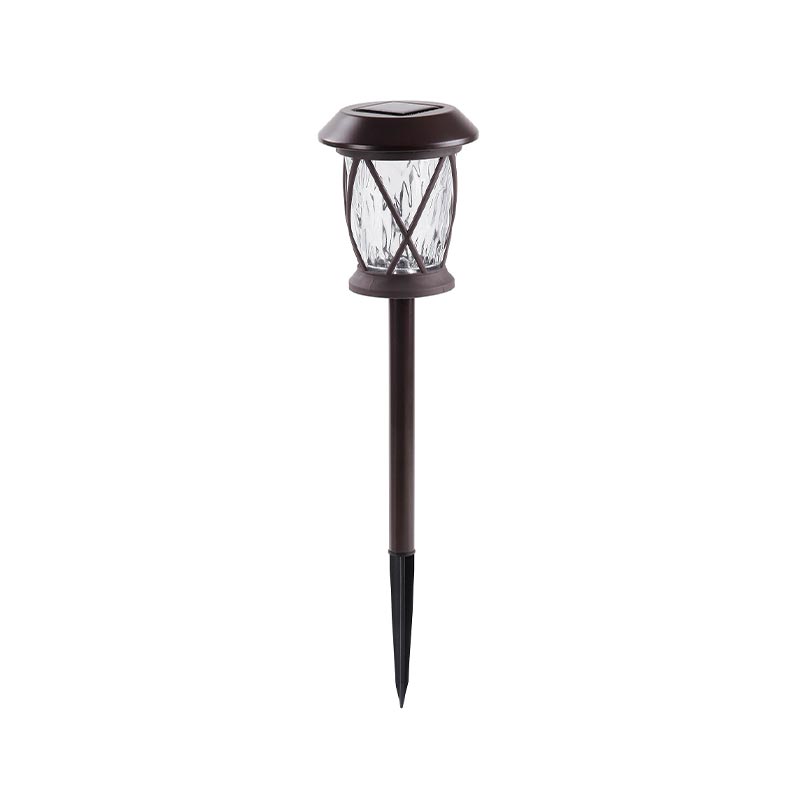
Table of Contents
- How Do Glass Solar Stake Lights Work in Outdoor Environments?
- How Should Glass Solar Stake Light Parameters Be Evaluated?
- How Are Glass Solar Stake Lights Applied Across Different Scenarios?
- How Will Glass Solar Stake Lights Evolve in the Coming Years?
Outline
- Operational principles and material structure
- Technical parameters and performance benchmarks
- Application scenarios and installation considerations
- Industry development direction and market adaptation
How Do Glass Solar Stake Lights Work in Outdoor Environments?
Glass Solar Stake Lights are self-powered outdoor lighting devices that utilize photovoltaic technology to convert sunlight into stored electrical energy. During daylight hours, solar panels mounted at the top of the fixture absorb solar radiation and convert it into electricity, which is stored in an internal rechargeable battery. When ambient light levels drop below a defined threshold, an integrated photosensor activates the light source automatically.
The defining characteristic of this product category is the use of glass as a primary exterior material. Compared with plastic alternatives, glass provides improved light diffusion, enhanced resistance to UV degradation, and a more refined visual appearance. In outdoor pathways, gardens, and landscaped commercial areas, the glass housing allows light to be distributed evenly while maintaining structural integrity under variable weather conditions.
From a systems perspective, Glass Solar Stake Lights typically integrate the following components:
- Monocrystalline or polycrystalline solar panel
- Rechargeable lithium-ion or Ni-MH battery
- LED light source with defined color temperature
- Glass diffuser and weather-resistant sealing
- Ground stake and support structure
The interaction between these components determines overall performance, illumination duration, and product lifespan in real-world outdoor settings.
How Should Glass Solar Stake Light Parameters Be Evaluated?
Evaluating Glass Solar Stake Lights requires a structured assessment of technical parameters rather than reliance on surface-level appearance. Key specifications directly influence reliability, brightness stability, and operational efficiency.
| Parameter | Typical Range | Technical Significance |
|---|---|---|
| Solar Panel Type | Monocrystalline / Polycrystalline | Affects energy conversion efficiency under varying sunlight conditions |
| Battery Capacity | 600–2200 mAh | Determines nightly runtime and charge retention |
| LED Output | 5–20 Lumens | Defines illumination intensity for decorative or guidance lighting |
| Color Temperature | 2700K–6500K | Controls visual warmth and landscape integration |
| Ingress Protection | IP44–IP65 | Indicates resistance to water and dust exposure |
| Material Composition | Glass + Stainless Steel / ABS Base | Impacts durability, corrosion resistance, and light diffusion |
From a professional procurement perspective, balanced parameter alignment is more critical than maximizing a single specification. For example, higher battery capacity must be matched with sufficient solar panel efficiency to avoid incomplete charging cycles.
Glass Solar Stake Light Common Questions and Answers
Q: How long can Glass Solar Stake Lights operate after a full charge?
A: Under optimal sunlight exposure, most Glass Solar Stake Lights can operate between 6 and 10 hours per night. Actual runtime depends on battery capacity, LED power consumption, and seasonal daylight variation.
Q: Do glass housings affect light output efficiency?
A: Properly designed glass diffusers enhance light uniformity without significantly reducing output. Textured or frosted glass can minimize glare while maintaining effective illumination distribution.
Q: How does weather exposure impact long-term performance?
A: Products with appropriate ingress protection ratings and sealed glass assemblies demonstrate stable performance under rain, humidity, and moderate temperature fluctuations. Extreme climates require higher IP ratings and reinforced sealing.
How Are Glass Solar Stake Lights Applied Across Different Scenarios?
Glass Solar Stake Lights are widely adopted across both residential and commercial landscapes due to their ease of installation and autonomous operation. Typical application scenarios include garden pathways, driveway borders, patios, courtyards, parks, hospitality venues, and retail exterior displays.
In residential environments, these lights serve as visual guides and ambient illumination elements. Their stake-mounted design allows repositioning without electrical work, making them suitable for evolving landscape layouts. In commercial projects, uniform spacing and consistent color temperature contribute to cohesive outdoor lighting schemes.
Installation considerations include soil density, sun exposure angles, and spacing intervals. Optimal placement ensures sufficient daytime charging while avoiding shading from vegetation or architectural structures. Maintenance requirements are minimal, generally limited to periodic surface cleaning of the solar panel and glass diffuser.
How Will Glass Solar Stake Lights Evolve in the Coming Years?
The future development of Glass Solar Stake Lights is closely aligned with broader advancements in photovoltaic efficiency, energy storage, and LED miniaturization. Higher-efficiency solar cells will enable improved charging performance even in partially shaded environments. Battery chemistry improvements are expected to extend lifecycle durability while reducing replacement frequency.
Design trends indicate increased integration of smart control elements, such as adaptive brightness regulation and improved photosensor sensitivity. Material innovation will further refine glass compositions to balance strength, transparency, and diffusion characteristics.
As outdoor lighting continues to shift toward decentralized, renewable-powered solutions, Glass Solar Stake Lights are positioned as a stable and adaptable option across diverse market segments.
Within this evolving landscape, manufacturers such as Ningbo Hejia Lighting continue to refine product engineering and material selection to meet international market expectations for outdoor solar lighting solutions.
For detailed product specifications, customization discussions, or project-based inquiries related to Glass Solar Stake Lights, interested parties are encouraged to contact us for professional consultation and technical support.