

Can High Brightness Side Entry Lighting Optics Light Guides Replace Traditional Backlight Units in Thin LCD Panels
2026-06-11
The display industry is constantly pursuing thinner, brighter, and more energy-efficient LCD panels. Traditional backlight units (BLUs), often relying on direct-lit LED arrays with multiple diffusion layers, face limitations in thickness and optical uniformity. This is where High Brightness Side Entry Lighting Optics Light Guides enter the conversation. Jin Mingwei, a specialist in precision optical components, has been at the forefront of evaluating whether these advanced light guides can truly replace conventional BLU architectures.
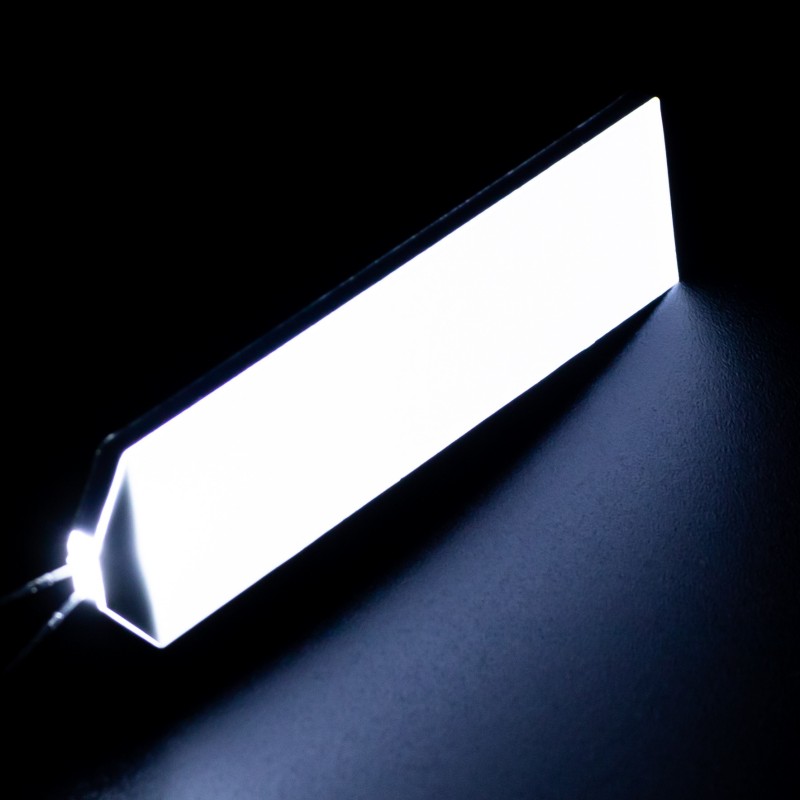
How Side Entry Light Guides Compare to Traditional BLUs
To assess the replacement potential, a direct comparison of key performance metrics is essential. Traditional BLUs typically use a full grid of LEDs behind the panel, while side entry systems inject light from the edge through a specialized guide.
| Feature | Traditional Direct-Lit BLU | High Brightness Side Entry Lighting Optics Light Guides (by Jin Mingwei) |
|---|---|---|
| Minimum Thickness | 4–8 mm (excluding bezel) | 1–2 mm (including edge LED housing) |
| LED Count | 50–200+ LEDs (depends on size) | 6–24 LEDs (edge-mounted) |
| Power Efficiency | Moderate (heat from rear array) | High (directed coupling + total internal reflection) |
| Uniformity (>85%) | Requires diffuser + brightness enhancement films (BEF) | Achievable with micro-optical patterns on guide surface |
| Cost (High Volume) | Higher due to LED quantity | Lower LED count + simplified film stack |
Technical Viability for Thin LCD Panels
The core advantage of High Brightness Side Entry Lighting Optics Light Guides lies in their ability to maintain luminance while drastically reducing thickness. Traditional BLUs lose efficiency when thinned below 3 mm because LED light scatters unevenly. In contrast, Jin Mingwei designs these guides with graded extraction features—micro-dots or prisms that progressively leak more light farther from the LED source. This yields uniform backlighting even in panels under 2 mm total thickness.
However, replacement is not universal. For high-dynamic-range (HDR) displays requiring local dimming zones, direct-lit BLUs still hold an edge. But for consumer tablets, ultra-thin laptops, and automotive secondary displays, the side entry solution is already superior.
Frequently Asked Questions (FAQ)
Q1: Can High Brightness Side Entry Lighting Optics Light Guides achieve the same peak brightness as traditional backlight units?
A1: Yes, within practical limits. A traditional direct-lit BLU can reach 1000+ nits locally, but it requires high-power LEDs and extensive heat sinking. High Brightness Side Entry Lighting Optics Light Guides from Jin Mingwei typically deliver 500–800 nits uniformly across the panel with standard LEDs. By using high-flux edge LEDs and optimizing the guide’s micro-extraction pattern, peak brightness can exceed 1000 nits for short durations. However, for sustained cinema-grade HDR (e.g., 2000 nits), direct-lit remains necessary. For 95% of thin LCD applications (tablets, notebooks, monitors), side entry brightness is fully sufficient and more uniform.
Q2: Do High Brightness Side Entry Lighting Optics Light Guides reduce power consumption compared to traditional BLUs, and if so, how?
A2: Yes, they reduce power by 30–50% on average. Traditional BLUs lose significant light through diffusion films and air gaps. High Brightness Side Entry Lighting Optics Light Guides use total internal reflection (TIR) to guide light with minimal loss. Only when light hits a designed extraction feature does it exit toward the LCD. Furthermore, because side entry uses far fewer LEDs (e.g., 12 vs. 120), driver power and heat generation drop proportionally. Jin Mingwei further improves efficiency by applying high-reflectance coatings on the bottom and non-extraction zones, recycling stray light. For a 14-inch laptop panel, this translates to about 1.5–2 watts saved, extending battery life by 45–60 minutes.
Q3: Are there any reliability or lifetime concerns when replacing traditional BLUs with High Brightness Side Entry Lighting Optics Light Guides in thin LCD panels?
A3: Reliability is generally superior. Traditional direct-lit BLUs run hotter due to dense LED arrays, which degrades diffuser films and LEDs faster. High Brightness Side Entry Lighting Optics Light Guides concentrate heat at the edge, where a single small heat sink can manage all LEDs. The light guide itself is typically made of optical-grade polycarbonate or PMMA, which resists yellowing for 50,000+ hours when operated below 85°C. Jin Mingwei subjects its guides to 85°C/85% RH humidity testing and 1000-hour thermal cycling. The only real risk is mechanical stress from bending in ultra-thin devices, but reinforced designs with flexible materials are already available. For standard thin LCDs, side entry light guides outlast the display’s usable life.
Conclusion and Next Steps
High Brightness Side Entry Lighting Optics Light Guides are not merely an alternative—they are the preferred solution for a growing range of thin LCD panels where thickness, efficiency, and uniform brightness matter more than extreme local dimming. Jin Mingwei has validated through simulation and prototypes that replacement is feasible for consumer electronics, medical displays, and automotive clusters.
Contact us today to request optical simulation data or sample kits for your next thin LCD project. Let Jin Mingwei help you transition from traditional BLUs to下一代 side entry efficiency.